The business has moved on
Services, audience, positioning, team, locations, or brand presentation no longer match what customers see online.
Website redesign services
Veriq redesigns business websites that have become unclear, difficult to use, slow, hard to maintain, or outgrown by the business. The work starts with the current site: what to keep, what to improve, and what may need replacing.
Why businesses redesign
Age alone is not the test. A redesign becomes relevant when the gap between the current website and the current business creates repeated customer-facing, content, or technical problems.
Services, audience, positioning, team, locations, or brand presentation no longer match what customers see online.
Navigation, mobile layouts, forms, accessibility, speed, or calls to action make common tasks harder than they should be.
Routine content changes break layouts, require workarounds, or depend on a system the team can no longer manage confidently.
New services, content, integrations, locations, or customer journeys no longer fit the current platform or structure.
Choose the intervention
Before changing anything
The audit identifies the business problem, the customer path, the technical constraints, and the assets worth preserving. It also prevents a visual preference from being mistaken for a complete redesign strategy.
Review the signs that a site is outdatedWhat redesign can address
The scope should follow the audit. Some projects need only a few of these workstreams; others need them planned together because the failures repeat across the site.
Clarify the offer, audiences, page hierarchy, navigation, and the path from a customer question to a useful next step.
Recompose content, controls, forms, media, and conversion actions so the experience works across current screen sizes.
Reduce unnecessary weight, improve loading behavior, use semantic structure, and build keyboard, contrast, and form quality into the system.
Repair or replace contact flows, booking, quoting, CRM connections, ecommerce, and customer-facing integrations where needed.
Plan page intent, crawlability, metadata, canonicals, internal links, structured data where valid, and redirects when URLs change.
Choose an implementation the business can operate, with clear account ownership, content responsibilities, and support after launch.
Responsible migration
Existing search visibility cannot be guaranteed through a redesign, but preventable migration mistakes can be reduced. Preserve what still serves the business and document deliberate changes before launch.
Use the redesign SEO launch checklistA deliberate custom rebuild
Carry forward accurate content, useful URLs, analytics context, working integrations, and recognizable brand elements when they still serve the business.
Create a custom responsive design and develop it around the current message, customer journey, content, performance needs, and required editing model.
Strengthen search foundations and add quoting, booking, ecommerce, lead capture, or other customer-facing functionality where it improves the journey.
Redesign process
Review goals, content, customer paths, analytics, technical constraints, ownership, and the parts that already work.
Separate focused fixes from shared redesign needs, migration requirements, and functionality that truly needs rebuilding.
Map navigation, pages, messages, existing URLs, redirects, assets, integrations, responsibilities, and launch criteria.
Create the responsive system around real content, then develop the custom website and integrate the functionality it needs.
Verify devices, accessibility, performance, forms, metadata, redirects, analytics, indexability, and production behavior.
Relevant work
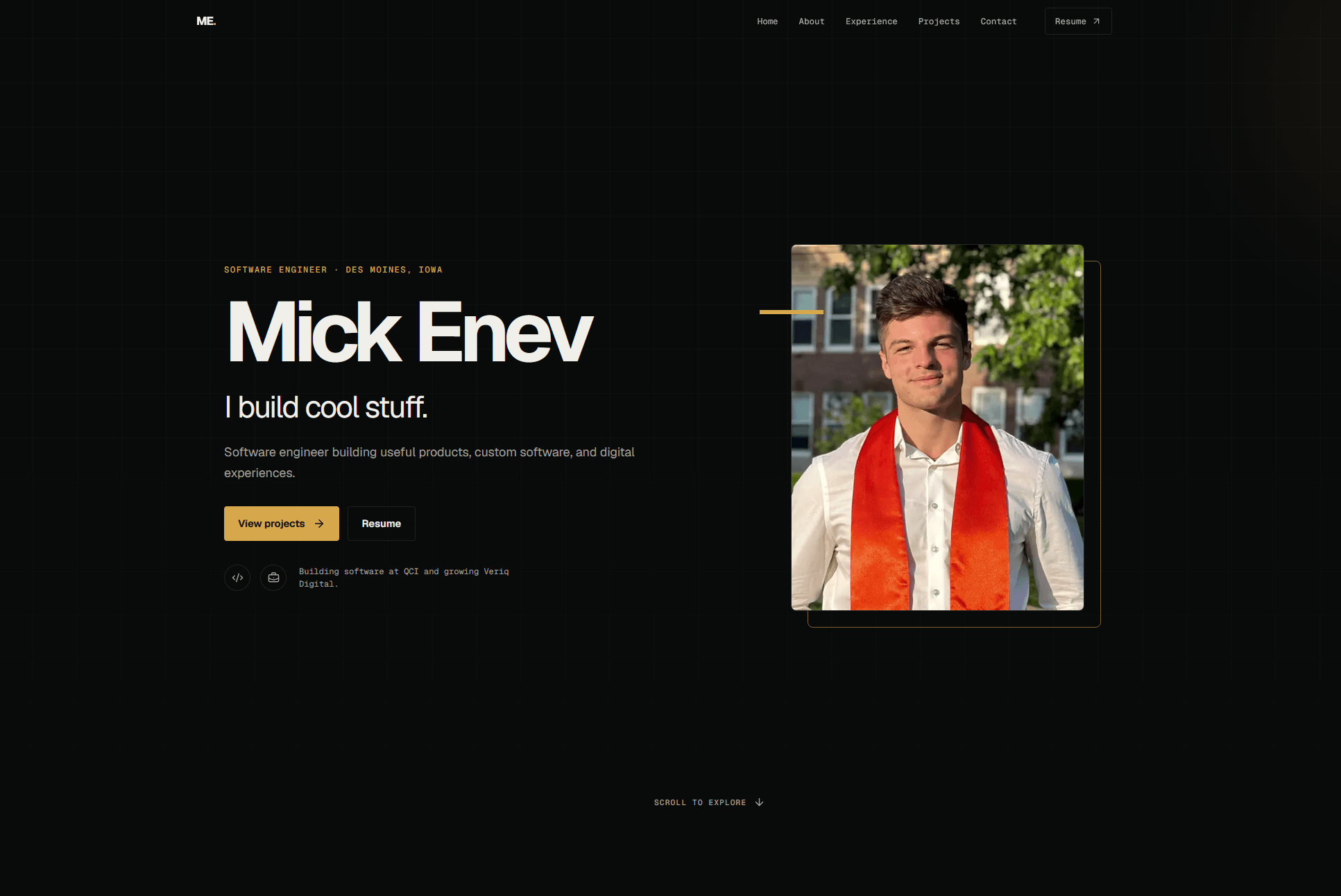
This Veriq founder project replaced an outdated personal portfolio with a clearer visual system, improved performance, and a stronger way to present software work. It is not a client case study or a promise of business results.
View the project detailsPlan the right redesign
Frequently asked questions
No. A focused improvement may be enough when the platform, content structure, and core customer paths remain sound. Veriq evaluates whether problems are isolated, repeated, or architectural before recommending the scope.
Veriq audits the current content, indexed URLs, analytics, forms, integrations, and working customer paths before planning the custom rebuild. Useful material can be preserved or migrated while outdated structure and technical constraints are replaced deliberately.
Yes. Veriq custom designs and develops the new website around the business, its customers, content, conversion path, and required functionality. Modern technology such as Next.js provides the technical foundation.
Yes. A content management system can be integrated when the business needs to manage specific content after launch. Editing responsibilities, account ownership, and ongoing support are defined with the project.
No provider can guarantee unchanged rankings. Responsible redesign work can reduce avoidable risk by reviewing indexed URLs, page intent, redirects, metadata, canonicals, sitemaps, internal links, analytics, Search Console, and backlinks.
Cost depends on the current site's condition, scope, content, design, migration, integrations, custom functionality, redirects, testing, and support. Veriq defines the work before providing a proposal.
Bring the current website and the problems you are seeing.